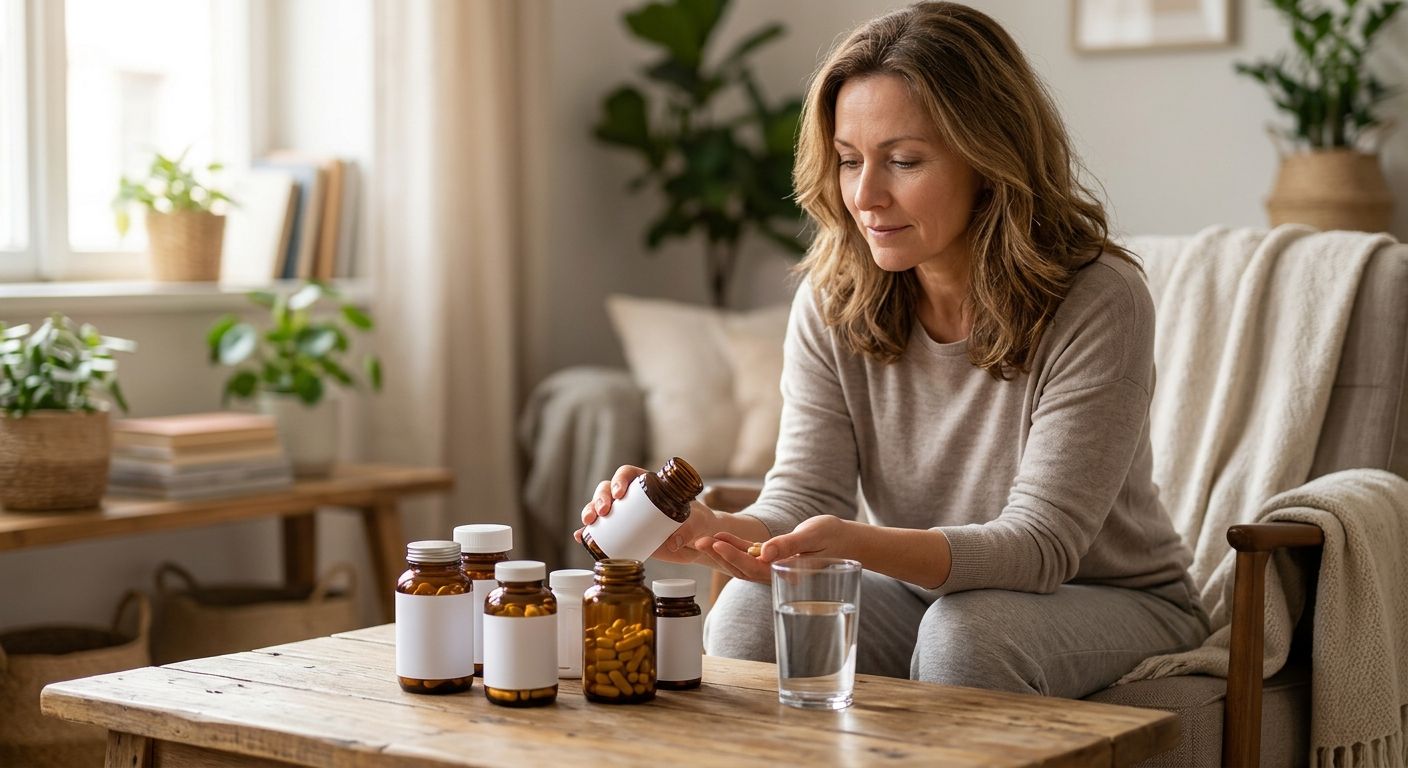
Menopause supplements range from single-ingredient herbs to blended "symptom relief" formulas, and no two women need the same one. The best menopause supplements in 2026 are matched to a specific symptom — hot flashes, sleep, mood, or bone density — not picked off a generic top-10 list.
- Black cohosh standardized extract (20-40 mg/day) is the best overall pick for hot flashes and night sweats in 2026.
- Magnesium glycinate (200-400 mg) is the best budget option for sleep and stress support.
- Ashwagandha (KSM-66, 300-600 mg) is best for cortisol and stress, not hot flashes specifically.
- Vitamin D3 plus calcium (1,200 mg/day for women 51+) matters most for bone density during menopause.
- No supplement on this list treats, cures, or prevents menopause — all support claims are traditional-use or symptom-focused.
Why this matters
Menopause is defined as 12 months without a period, with the average US woman reaching it around age 51. The years around that point bring hot flashes, disrupted sleep, mood shifts, and accelerated bone loss as estrogen declines — and supplement aisles have exploded with products claiming to help.
The Midlife List exists to sort ingredient science from marketing copy. Commission never determines whether a category makes this list or where it ranks — the goal is an honest comparison of what's actually been studied at what dose, so you can match a product to your symptom instead of guessing.
What makes the best menopause supplement
Before ranking anything, here's what actually separates a well-made product from a label with a good story:
- Dose matches the studied range — not a fraction of it, hidden inside a "proprietary blend"
- Standardized extract percentage listed for botanicals like black cohosh or soy isoflavones
- Third-party testing for purity and contaminants (look for USP, NSF, or a certificate of analysis)
- Format fits your routine — capsule, gummy, or powder, taken consistently beats the "best" ingredient taken sporadically
- Clear warnings for interactions with hormone therapy, blood thinners, or liver conditions
- Independent vetting, not pay-to-rank placement
Best menopause supplements in 2026: at a glance
| Category | Best for | Standout feature | Key limitation |
|---|---|---|---|
| Black cohosh | Hot flashes, night sweats | Most-studied botanical for vasomotor symptoms | Trial results are mixed |
| Magnesium glycinate | Sleep, stress | Gentler on digestion than magnesium oxide | Effect on hot flashes is minimal |
| Soy isoflavones | Mild hot flash relief | Plant-based estrogen-mimicking compounds | Not advised with estrogen-sensitive cancer history |
| Ashwagandha (KSM-66) | Stress, cortisol | Long history in Ayurvedic use | Not menopause-specific evidence |
| Vitamin D3 + calcium | Bone density | Directly tied to postmenopausal bone loss | Doesn't touch hot flashes or mood |
| Omega-3 (fish oil) | Mood, joint comfort | Widely available, well-tolerated | Modest effect size in most trials |
| Evening primrose oil | Breast tenderness | Contains GLA, an anti-inflammatory fatty acid | Weak evidence for hot flash relief |
1. Black cohosh: best menopause supplement for hot flashes and night sweats
Black cohosh is the most heavily researched herbal option for vasomotor symptoms, typically standardized and dosed at 20-40 mg of extract daily. It's traditionally used to help ease hot flashes and night sweats, though clinical trials are genuinely split — some show meaningful reduction in symptom frequency versus placebo, others show none.
Black cohosh pros:
- Best-studied herbal option specifically for hot flashes
- Available in standardized extract capsules and tablets
- Doesn't contain plant estrogens the way soy isoflavones do
Black cohosh cons:
- Trial results are inconsistent across studies
- Rare reports of liver-related concerns mean it's not right for anyone with liver disease without medical guidance
- Effects, when present, take 4-8 weeks to show up
Best for: hot flashes and night sweats. Verdict: Buy — worth a trial period, with a doctor's sign-off if you have liver concerns.
2. Magnesium glycinate: best menopause supplement for sleep and stress
Magnesium glycinate is the budget pick on this list and one of the more broadly useful ones. The RDA for women over 31 is 320 mg/day, and supplement doses commonly run 200-400 mg in glycinate form, chosen specifically because it causes less GI upset than magnesium oxide.
Magnesium glycinate pros:
- Inexpensive relative to specialty botanicals
- Supports sleep quality and stress resilience, both commonly disrupted in menopause
- Well-tolerated at studied doses
Magnesium glycinate cons:
- Does little for hot flashes directly
- Higher doses can cause loose stools
- Benefits are subtle, not dramatic, in most users
Best for: sleep and everyday stress. Verdict: Buy — an easy, low-risk starting point.
3. Soy isoflavones: best menopause supplement for mild hot flash relief
Soy isoflavones, primarily genistein, mimic estrogen weakly at the receptor level. Studies commonly use 50-100 mg of isoflavones daily, and meta-analyses show a modest reduction in hot flash frequency for some women, though not all.
Soy isoflavone pros:
- Plant-based option with a long research history
- Available in capsule form derived from soy extract, not just dietary soy
- Generally well-tolerated
Soy isoflavone cons:
- Not recommended for women with a history of estrogen-sensitive cancers without physician guidance
- Effect size is modest, not dramatic
- Response varies based on individual gut bacteria that metabolize isoflavones
Best for: women who want a plant-based hot flash option and have no estrogen-sensitive cancer history. Verdict: Hold — discuss with your doctor first.
4. Ashwagandha (KSM-66): best menopause supplement for stress and cortisol
Ashwagandha root extract, most commonly the KSM-66 form, is traditionally used in Ayurvedic medicine to help support the body's stress response. Studied doses typically run 300-600 mg/day. It shows up in gummy formats as well as capsules — the format reviewed most often on this site is a gummy blend, which trades some dose precision for easier daily adherence.
Ashwagandha pros:
- Long traditional-use history for stress support
- KSM-66 is a well-characterized, standardized extract form
- Gummy formats improve consistency for people who skip pills
Ashwagandha cons:
- Evidence is for general stress markers, not menopause symptoms specifically
- Gummies often deliver a lower dose per serving than capsule forms
- Not well-studied for long-term daily use past several months
Best for: stress and cortisol support alongside — not instead of — a menopause-specific ingredient. Verdict: Hold — a reasonable add-on, not a standalone fix.
5. Vitamin D3 + calcium: best menopause supplement for bone density
Estrogen decline during menopause accelerates bone loss, which is why vitamin D and calcium matter more here than almost anywhere else on this list. The NIH Office of Dietary Supplements sets calcium intake at 1,200 mg/day for women 51 and older, with vitamin D commonly recommended at 600-800 IU for adults.
Vitamin D3 + calcium pros:
- Directly addresses a documented risk of menopause: bone density loss
- Backed by decades of nutrition research, not emerging science
- Widely available in combination formulas
Vitamin D3 + calcium cons:
- Does nothing for hot flashes, sleep, or mood
- Excess calcium supplementation has been linked to kidney stone risk in some studies
- Easy to double-dose if also eating a calcium-rich diet
Best for: long-term bone health during and after the menopause transition. Verdict: Buy — check your current dietary calcium intake before layering it on top.
6. Omega-3 (fish oil): best menopause supplement for mood and joint comfort
Omega-3 fatty acids, typically dosed around 1,000 mg combined EPA/DHA daily, show modest research support for mood stability and joint comfort — both common complaints during the menopause transition.
Omega-3 pros:
- Well-tolerated with a long safety record
- Supports mood and joint comfort, an underserved gap on most menopause supplement lists
- Widely available with third-party purity testing
Omega-3 cons:
- Effect size in trials is modest
- Quality varies significantly by brand — rancid or low-purity oil is common
- Fishy aftertaste is a common complaint
Best for: mood support and joint comfort. Verdict: Hold — pick a third-party tested brand or skip it.
7. Evening primrose oil: best menopause supplement for breast tenderness
Evening primrose oil contains gamma-linolenic acid (GLA), traditionally used to help with breast tenderness and skin-related symptoms. It's the shortest section on this list because the evidence is the thinnest — systematic reviews find inconsistent results for hot flash relief specifically.
Evening primrose oil pros:
- May help with breast tenderness for some women
- Generally low risk of side effects
Evening primrose oil cons:
- Weak, inconsistent evidence for its most-marketed use (hot flashes)
- Can interact with blood-thinning medication
Best for: breast tenderness, not hot flash relief. Verdict: Wait — better options exist for most primary symptoms.
How we ranked these
Each category was weighed against the criteria above: does the studied dose match what's actually on the label, is the extract standardized, and does the evidence match the specific symptom it's marketed for. Categories with mixed or thin evidence, like evening primrose oil, rank lower regardless of how they're marketed.
“A supplement dosed below the studied range isn't a weaker version of the same product — it's a different product.”
Which menopause supplement should you choose?
Start with the symptom that bothers you most. If hot flashes and night sweats dominate, black cohosh at a standardized 20-40 mg dose is the best overall pick for 2026. If sleep and everyday stress are the bigger problem, magnesium glycinate is the lower-cost, lower-risk starting point. Bone health deserves its own line item regardless of which symptom you're treating — 1,200 mg of calcium and adequate vitamin D matter for every woman past 51, hot flashes or not.
Compare full supplement reviews
See ingredient-by-ingredient breakdowns on The Midlife List.
FAQ
What is the best menopause supplement for hot flashes?
Black cohosh, standardized to 20-40 mg of extract daily, has the most research behind it for hot flashes and night sweats, though results across studies are mixed. Soy isoflavones (50-100 mg/day) are a secondary option for some women.
Do menopause supplements actually work?
Some ingredients, like black cohosh and soy isoflavones, show modest symptom reduction in a portion of clinical trials, while others show no difference from placebo. None of them treat, cure, or prevent menopause itself — they're aimed at specific symptoms.
Is black cohosh safe to take every day?
Black cohosh is generally well-tolerated at studied doses of 20-40 mg/day, but rare reports of liver-related issues mean anyone with liver disease should check with a doctor first. It's not recommended alongside hormone therapy without medical guidance.
Can I take ashwagandha and magnesium together?
Both are commonly used together for stress and sleep support and don't have a known direct interaction, but ashwagandha's evidence is for general stress, not menopause symptoms specifically. Check with a doctor if you take other medications.
How much calcium do menopausal women need?
The NIH Office of Dietary Supplements sets the target at 1,200 mg/day for women 51 and older. Diet plus supplement intake combined should hit that number, not supplements alone stacked on top of a calcium-rich diet.
Are gummy supplements as effective as capsules?
Gummies often deliver a lower active dose per serving than capsules of the same ingredient, though they can improve consistency for people who skip pills. Check the label for the actual milligram amount, not just the ingredient name.
How long before a menopause supplement starts working?
Most botanical ingredients, including black cohosh, take 4-8 weeks of consistent use before any symptom change is noticeable. Magnesium for sleep can show effects sooner, often within one to two weeks.
Should I talk to my doctor before starting a menopause supplement?
Yes, especially if you take blood thinners, hormone therapy, or have a history of liver disease or estrogen-sensitive cancer. Supplements are not a substitute for medical care during the menopause transition.
One last thing
The biggest reason black cohosh trials disagree with each other isn't the herb — it's inconsistent standardization across the products actually tested. A label that lists the standardized triterpene glycoside percentage, not just "black cohosh root extract," is the single detail worth checking before you buy anything in this category.
These statements have not been evaluated by the Food and Drug Administration. These products are not intended to diagnose, treat, cure, or prevent any disease. The Midlife List may earn a commission from links on this page; commission never determines whether a product or category is included or how it's ranked.